Contents
One of the most important questions when choosing an energy storage system is which battery chemistry it uses. Today, the most widely preferred chemistry in energy storage installed at fixed sites is LFP (lithium iron phosphate).
What Is an LFP Battery?
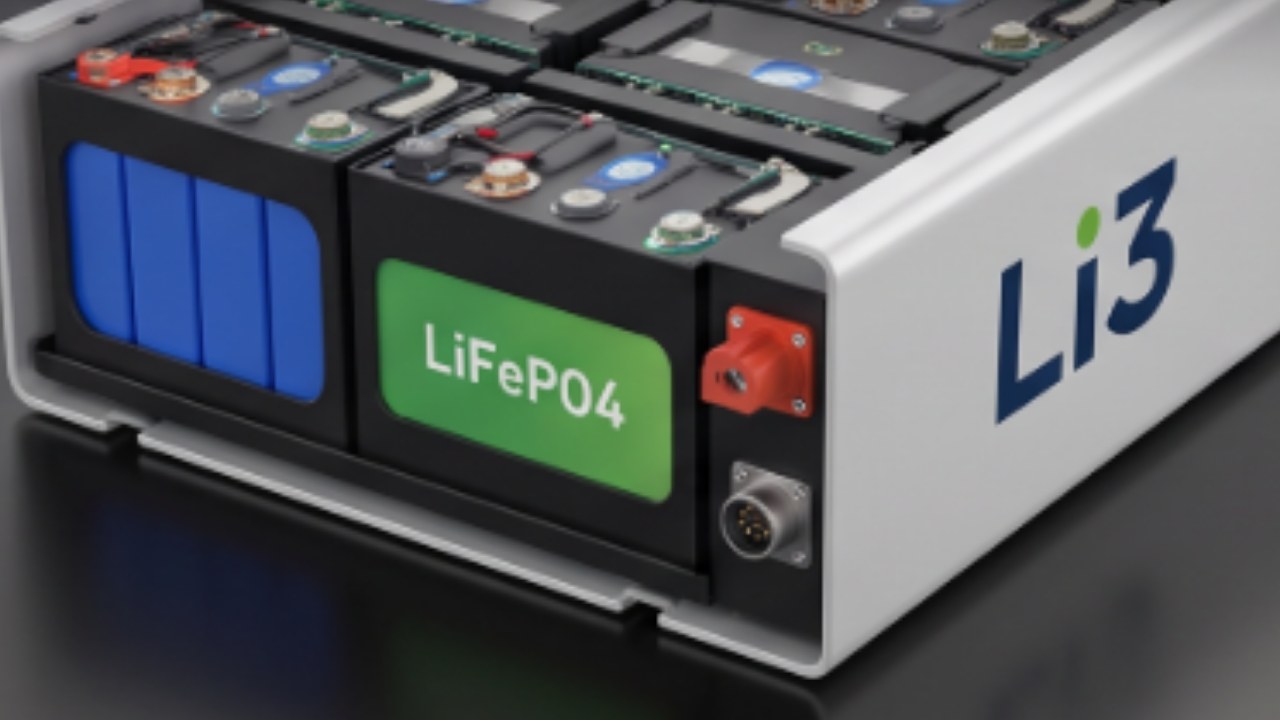
LFP is a type of lithium ion battery that uses lithium iron phosphate as its cathode material. Because of its chemical structure, it behaves more stably at high temperatures.
Why Is It Preferred in Energy Storage?
- High safety: It is one of the lithium battery chemistries with the lowest fire risk.
- Long cycle life: It withstands a large number of charge and discharge cycles, which makes it suitable for storage systems that run every day.
- Stable performance: It retains its capacity for a long time.
The Role of Liquid Cooling
Operating temperature is one of the most important factors that determine battery life. Liquid cooling reduces the temperature difference between cells and keeps each cell at a suitable temperature. The advanced liquid cooling technology used in Lİ3 systems extends cell life.
Safety Is About More Than the Battery
A safe energy storage system depends on the right battery chemistry, well designed cooling, an energy management system that monitors continuously, and fire detection and suppression solutions all working together. After installation, safe operation is maintained through remote monitoring and periodic maintenance.
To learn more about our products and their technical specifications, contact us.